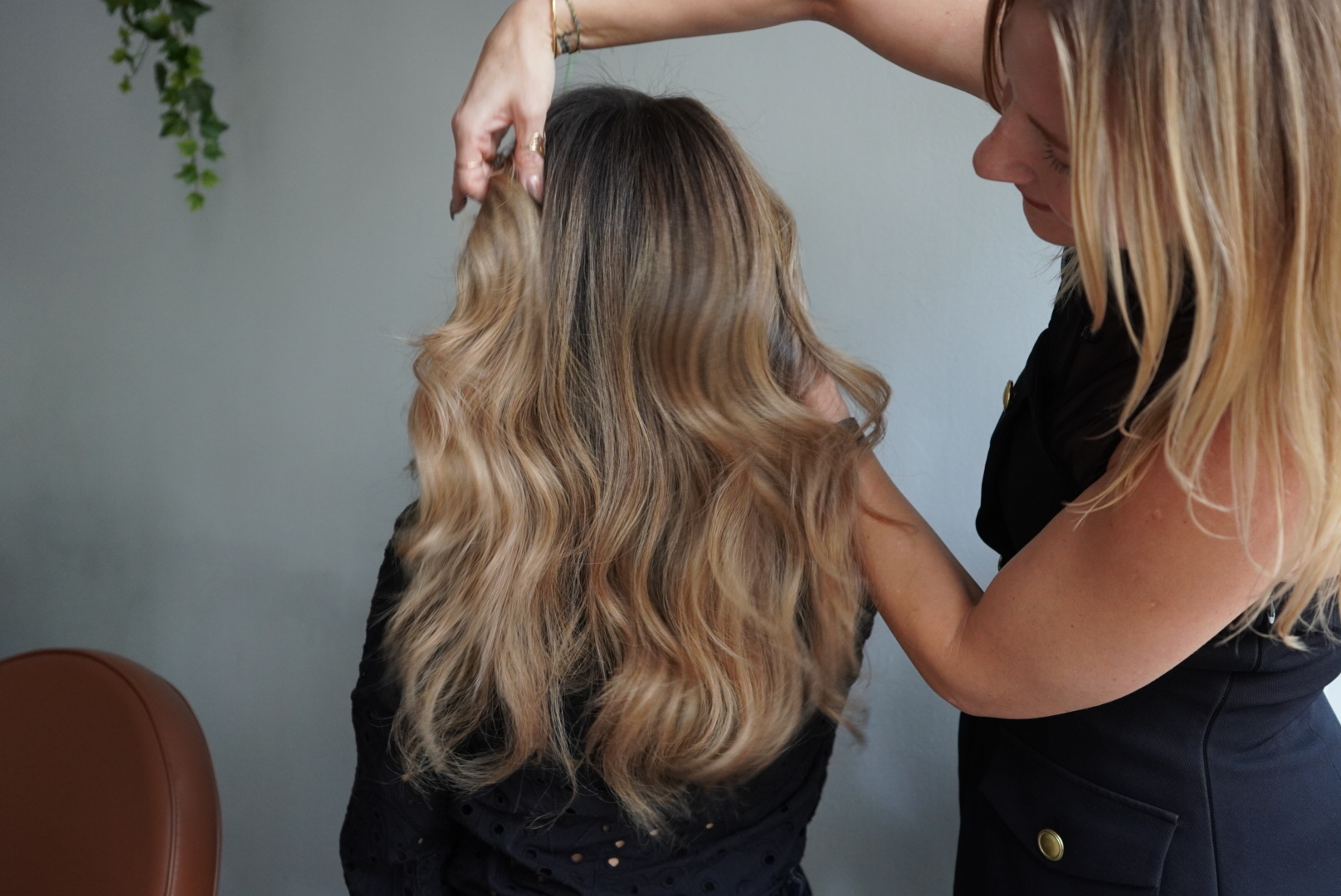
09 Oct From Uneven Blonde Bands to Soft Beige Dimension: A Phased Manhattan Color Correction
When Blonde Color Looks Banded, Brassy, or Uneven
Beautiful blonde is rarely about making hair as light as possible. It is about creating a balanced, believable blend of lightness, depth, and tone while protecting the condition of the hair. When previous lightening has left behind horizontal bands, patchy brightness, warm areas, dull ends, or a stark contrast at the root, the path back to a polished result requires more than another round of bleach.
At Hair Art NYC, color correction is approached as a customized, integrity-first service. Our Manhattan colorists assess the hair’s current condition, chemical history, porosity, underlying pigment, and long-term color goals before determining the safest strategy. For many guests, achieving a soft beige, dimensional blonde is a phased process—not a rushed, one-appointment transformation.
This thoughtful approach helps preserve strength while steadily moving the hair toward a refined finish that grows out more gracefully and feels as healthy as it looks.
Why Uneven Blonde Bands Happen
Blonde banding is common, especially when hair has been lightened repeatedly over time. It typically appears as visible horizontal stripes through the mid-lengths, where one section is significantly warmer, darker, lighter, or more saturated than the hair above and below it.
There are several reasons this can happen:
- Overlapping lightener: Previously lightened hair is processed again while darker regrowth or bands remain under-processed.
- Inconsistent placement: Highlights, balayage, or foil work may not have been placed in a pattern that supports a seamless blend.
- Different porosity levels: Damaged or highly porous ends absorb toner differently from healthier hair near the roots.
- Uneven lift: Darker areas may not lift past warm underlying pigment in a single safe session.
- Too-frequent tonal changes: Repeatedly shifting between cool, warm, bright, and dark formulas can leave color muddy or unpredictable.
- At-home color or box dye: Previous permanent color, metallic salts, and uneven application can complicate future lightening.
- Faded toner masking structural issues: A toner may temporarily soften warmth, but it cannot erase a strong band caused by uneven depth.
The key is identifying whether the issue is primarily one of level, tone, placement, or hair condition. These concerns often overlap, which is why professional consultation matters.
What “Soft Beige Dimension” Really Means
Soft beige blonde is neither overly icy nor noticeably yellow. It lives in a balanced tonal range—often combining neutral, creamy, sandy, and subtly cool notes—to create a luminous blonde that complements the natural base rather than fighting against it.
Dimension is equally important. Instead of making every strand uniformly pale, a skilled colorist uses intentional depth and brightness to create movement. This may include:
- A softly diffused root area or root shadow
- Fine, strategically placed brightness around the face
- Hand-painted ribbons through the lengths
- Deeper lowlights where needed to visually break up harsh bands
- A custom toner that connects the various tones into one cohesive result
The goal is not to cover every imperfection with darker color or aggressively chase every warm strand with more lightener. The goal is to create a controlled, wearable blonde with depth, softness, and a more forgiving grow-out.
Why a Phased Plan Is Often the Healthier Choice
Corrective blonde work asks a great deal of the hair. Hair that has already been lightened, heat styled, colored at home, or chemically treated may not be ready for extensive additional processing in one appointment.
A phased plan gives the colorist room to improve the canvas without sacrificing the integrity of fragile areas. Depending on the starting point, a correction may involve two or more appointments spaced apart with targeted maintenance between visits.
Phase One: Stabilize, Blend, and Protect
The first appointment is often focused on making the hair look significantly more polished while reducing unnecessary stress. This may mean correcting the most distracting bands, softening uneven contrast, and using tonal refinement to create a more unified appearance.
Possible services may include:
- Custom Color to address multiple concerns with a tailored combination of techniques
- Foliage or foilayage placement for targeted lift and controlled brightness
- Highlights to blend darker bands without over-lightening compromised ends
- Purposeful lowlights to restore dimension where hair has become too solid or uneven
- A gentle root shadow to diffuse a hard line of regrowth
- A custom toner to neutralize unwanted warmth and bring the palette together
At Hair Art NYC, all color services include one toner and styling, allowing the finished result to be assessed in its fully refined state. The first session may not deliver the lightest possible endpoint—and that is often intentional. A healthy, elegant intermediate result is far more valuable than an overly processed blonde that cannot hold tone or tolerate future services.
Phase Two: Refine the Lightness and Placement
Once the hair has had time to recover and the colorist can see how the previous work has settled, the next visit can focus on areas that still need additional refinement. This is where carefully selected sections may be lifted further, remaining bands can be softened, and brightness can be adjusted to better support the final beige palette.
Rather than applying the same formula everywhere, the colorist may work with different approaches across the head. Healthier virgin regrowth, resistant dark bands, porous ends, and previously lightened areas do not behave the same way. Each requires its own timing, formulation, and level of caution.
Phase Three: Polish, Maintain, and Personalize
The final phase is often where the result becomes especially seamless. Small adjustments to placement, depth, face-framing brightness, and toner choice can make the color look more expensive, natural, and intentional.
Maintenance may include a half-head balayage or foliage service, a face frame, a root shadow refresh, or a custom toner appointment. The exact schedule depends on your natural base, desired brightness, haircut, at-home routine, and how softly you want the color to grow out.
The Consultation: The Most Important Step in Color Correction
A proper consultation is not an afterthought—it is the foundation of responsible corrective color. Before beginning, a professional colorist should understand your history and evaluate what the hair can safely handle.
During a private color correction consultation at Hair Art NYC, the conversation may include:
- Your complete color history: salon color, box dye, glosses, toners, henna, bleach, and any recent changes.
- Previous chemical services: including keratin treatments, relaxers, smoothing services, and texture-altering treatments.
- Your current hair condition: elasticity, breakage, dryness, porosity, and areas of uneven density.
- Your visual goal: reference photos are helpful, but the colorist will assess what is realistic for your starting point.
- Your maintenance preference: whether you want a low-maintenance lived-in blonde or are comfortable with more frequent salon visits.
- Your home-care routine: shampoo, heat styling, swimming, mineral exposure, and color-depositing products can all affect longevity.
In some cases, a strand test may be recommended before more intensive lifting. This is especially important when there is unknown color history, substantial previous bleaching, dark box color, or signs of significant damage.
How Hair Integrity Is Protected During Corrective Color
Hair integrity is not simply about avoiding breakage in the moment. It is about making color decisions that allow the hair to remain manageable, resilient, and capable of receiving future services.
At Hair Art NYC, a correction plan may be paired with professional treatments selected for the hair’s specific needs. Available care options include:
- K18 treatment: designed to support hair that has experienced chemical or heat-related damage.
- Wella FusionPlex Repair treatment: a strengthening option for hair that needs a more supported feel after color services.
- Milbon treatment: a salon treatment option for improving softness, manageability, and the look of dry or stressed hair.
- Keratin treatments: including Keratin Complex, NKST, and Peter Coppola options when appropriate for the guest’s texture and goals.
Professional color care also depends on technique. Selective foil placement, controlled saturation, careful timing, strategic spacing between appointments, and avoiding unnecessary overlap can all make a meaningful difference.
Important: No ethical colorist should promise a specific degree of lightness when the hair’s condition suggests that further processing would create excessive risk. A measured plan protects the long-term possibility of reaching your desired color.
Choosing the Right Technique for an Uneven Blonde
There is no single “best” correction technique. The right choice depends on the pattern of the banding, the existing level of lift, the natural base color, and the amount of contrast needed to create balance.
Balayage
Balayage is hand-painted lightening that can create a soft, sunlit effect. It is often useful when the goal is a blended, lower-maintenance result rather than uniform root-to-end brightness. A full or half-head balayage can help introduce lighter movement while preserving dimension.
Foliage or Foilayage
Foliage combines hand-painted placement with foils, allowing for more controlled lift. For color correction, this can be valuable when certain areas need additional brightness but must be isolated carefully from fragile neighboring strands.
Traditional Highlights
Highlights remain one of the most precise ways to break up a dark or warm band. Fine, well-placed foils can create a bridge between different levels of blonde and improve the overall blend without lightening every strand.
Root Shadow and Root Melt
A custom root shadow can soften a harsh root line and visually connect new growth to the lighter lengths. It is particularly helpful for Manhattan guests who want a more natural grow-out and less obvious maintenance between appointments.
Custom Toner
Toner is essential for refining the final shade, but it is not a substitute for correction. A custom formula can balance brassiness, soften overly gray or violet tones, add creamy beige richness, and harmonize sections that lifted differently. Because porous hair can grab color, toner selection and timing must be highly individualized.
What to Expect After Your Appointment
Corrective color can look transformative immediately, but the best results continue with thoughtful aftercare. Blonde hair is especially affected by heat, mineral buildup, hard water, UV exposure, and overly aggressive cleansing.
To support your new tone and help preserve the work between salon visits:
- Use salon-recommended shampoo and conditioner appropriate for colored or lightened hair.
- Limit high-heat styling and always use a heat protectant.
- Do not overuse purple shampoo; excessive use can leave porous areas dull, smoky, or uneven.
- Schedule toner refreshes as recommended to maintain the desired beige balance.
- Be gentle with wet hair, particularly around fragile lightened ends.
- Use strengthening and moisture-focused treatments based on your colorist’s recommendation.
- Tell your colorist before using any at-home color, gloss, henna, or color-depositing mask.
Hair Art NYC works with trusted professional brands including IGK, K18, Wella, Milbon, Redken, Zenagen, and Keratin Complex. Your stylist can help you select an at-home routine that supports both tone retention and hair condition.
Common Questions About Blonde Color Correction
Can uneven blonde be fixed in one appointment?
Sometimes a major visual improvement can be achieved in one appointment, especially when the hair is in good condition and the banding is moderate. However, more complex corrections often require multiple sessions to protect the hair and achieve a more consistent, lasting result.
Will my hair need to go darker first?
Not always. In some situations, adding strategic depth is the most effective way to make uneven lightness look intentional and dimensional. In other cases, selective lightening is appropriate. The right decision depends on the existing pattern, your desired maintenance, and the hair’s ability to tolerate additional lift.
Can toner remove orange or yellow bands permanently?
Toner can improve the appearance of unwanted warmth, but it cannot permanently change the underlying level of lift. If a section has not lifted enough, it may need future targeted lightening once the hair is ready. Toner is a refinement tool, not a replacement for a carefully designed correction plan.
How often will I need maintenance?
Many dimensional blondes benefit from a toner or gloss refresh every few weeks, while partial lightening maintenance may be scheduled every few months. A root shadow, balayage, foliage, or highlight schedule will be personalized according to your grow-out preference and color goals.
Can I get a keratin treatment after color correction?
It may be possible, but timing and product selection matter. Always discuss recent and planned chemical services during your consultation so your colorist can recommend an appropriate sequence for your hair.
Visit Hair Art NYC in Gramercy
Hair Art NYC provides customized color correction, dimensional blonding, toner services, restorative treatments, haircuts, blowouts, and more for guests throughout Manhattan, Gramercy, and New York City. Our salon is located at 302 East 19th Street, New York, NY 10003.
Whether you are dealing with visible bands, uneven lifting, brassiness, over-processed ends, or a blonde that no longer feels like you, the first step is a professional assessment and a plan designed around the condition of your hair.
Start With a Thoughtful Color Plan
Corrective blonde work should never be rushed. With the right technique, realistic timing, customized toning, and a commitment to hair integrity, uneven color can be transformed into a softer, more dimensional, and more wearable result.
If your hair needs a thoughtful, integrity-first plan, request a private color correction consultation.
For additional information, contact Hair Art NYC at 212-300-4407.
No Comments